
Early Childhood Educators (ECEs) know the children in their care deeply—so deeply that they can sense a sneeze coming before it happens.
It is well known that ECEs influence the development of the human brain. They lay the foundation for academic learning, social development, and the critical skills that support long-term success in adulthood.
Their role is undeniable. These educators nurture, guide, and care for children in ways that shape not only what they learn, but who they become. They create safe, responsive environments where children can grow, explore, and develop a sense of self.
This kind of attunement is not a small skill. It is relational work that sits at the centre of healthy child development.
From the outside, you can easily see the calming impact of an educator. Watch a two-year-old being dropped off at preschool for the first time, and witness the quiet magic as an ECE steps in to soothe their distress. Notice the laughter and joy as a teacher brings a story to life. Feel the wonder as children are guided through messy sensory play or a simple science experiment.
This is the visible magic—the patience, the care, the extraordinary gifts of talented educators.
But what cannot be seen is just as powerful.
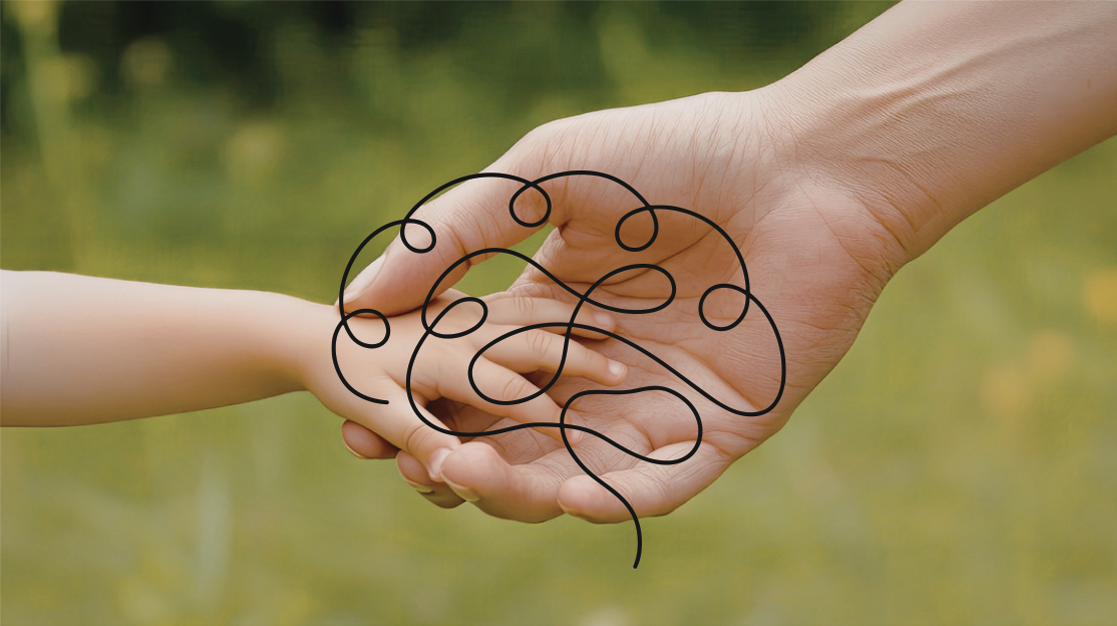
ECEs are quite literally shaping the architecture of children’s brains—and not only in the cognitive or social ways we often recognize.
Yes, they support language development, problem-solving, peer interaction, and everyday skills like zipping a jacket or putting on shoes. But beneath these moments lies something deeper: a vast amount of neurological scaffolding happening in real time.
ECEs are helping children build the foundations of self-regulation.
Regulation is the state in which the brain and body are in balance—when the energy we expend matches what our systems can sustain. These states shift constantly, from moment to moment, depending on
internal and external demands.
One of the most important parts of the brain involved in this process is the prefrontal cortex, which supports decision-making, impulse control, and emotional regulation. This area of the brain develops slowly and continues maturing into early adulthood. Because of this, young children rely heavily on the adults around them to help organize their emotional experiences.
This is where co-regulation becomes essential.
Co-regulation is the process of an adult helping a child return to calm through presence, tone, structure, and emotional safety. It might look like sitting beside a child during distress, offering a predictable routine, naming emotions, or simply staying close while a big feeling passes.
As Daniel J. Siegel describes in his work on interpersonal neurobiology, children develop the capacity for self-regulation through repeated experiences of being understood, soothed, and supported by caring adults. Over time, these experiences help different parts of the brain become more integrated, allowing children to think, feel, and respond with greater flexibility.
In everyday terms, this means that every moment of co-regulation is also a moment of brain-building.
When an educator helps a child calm their body, they are not only responding to behaviour—they are supporting the development of neural pathways that will eventually allow that child to regulate independently.
When a child is repeatedly met with calm, attuned responses, their nervous system begins to internalize what safety feels like. The more a child can experience these moments of what safety feels like, the more capacity they will have to move through challenging situations in the future.
But when those supportive experiences are missing, regulation becomes much harder. A dysregulated nervous system cannot simply “calm down” through instruction—it requires connection. It requires another person to help bring the system back into balance.
This is one of the most important, and often invisible, parts of the ECE role.
In early learning environments, educators are constantly doing this work in the background of everything else: preventing escalation before it happens, supporting recovery after big emotions, and holding steady emotional space for children who are still learning how to feel safely in the world.
Without a caring adult to guide them, young children struggle to regain a calm, regulated state. They rely on co-regulation—the steady presence of someone attuned to their needs—to help their nervous systems settle and find balance again.
And this is where the true impact of ECEs lies.
And at the same time, ECEs are also building relationships that children internalize as models for future connection.
Over time, these repeated relational experiences shape how children see themselves, how they relate to others, and how they move through stress. They become the foundation for resilience, empathy, and emotional well-being.
This is not separate from learning—it is the groundwork for all learning.
In every soothing moment, every shared laugh, every guided experience, ECEs are not just teaching— they are building brains.